-
Accessibility Tools
-
 Increase Text
-
 Decrease Text
-
 High Contrast
-
Low Contrast
-
 Links Underline
-
 Readable Font
-
 Reset
Reset
-
- info@admirecare.net.au
- +61 411 568 442
- +61 483 282 061
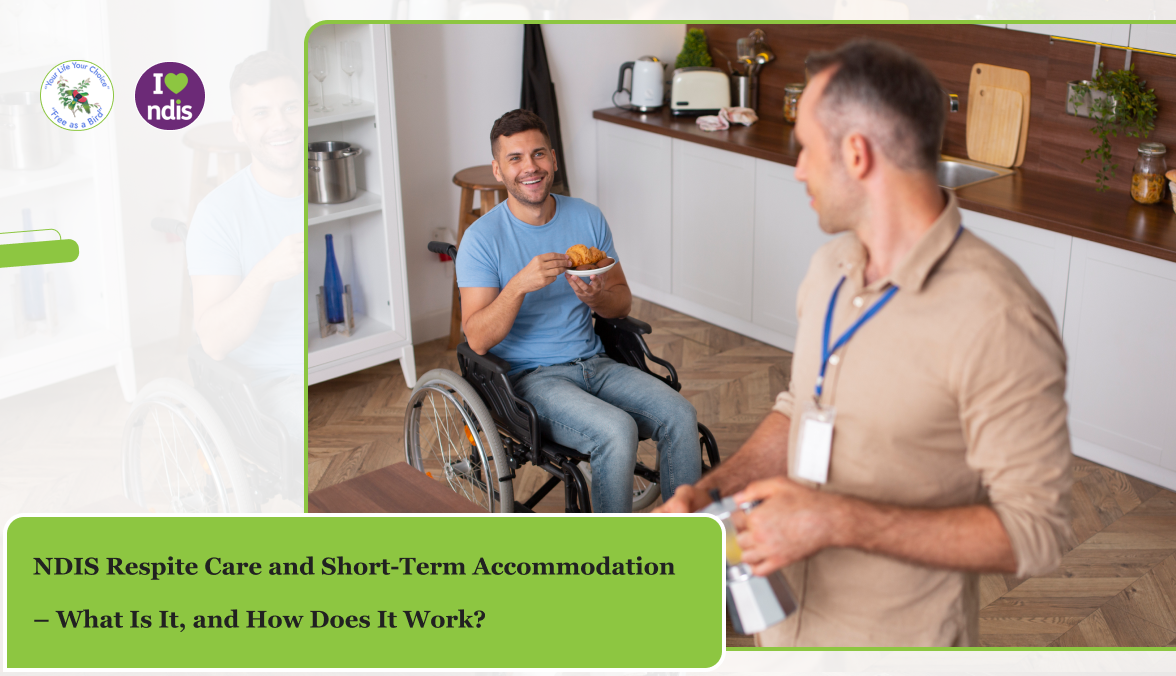
NDIS Short Term Accommodation (STA) & Respite Care: The Complete Perth Guide
Short Term Accommodation (STA) is the NDIS-funded support that delivers respite care — a short, supported stay away from home, usually up to 14 days at a time, that gives carers a genuine break and participants a safe, structured change of environment. Most participants can access up to 28 days of STA per year through their Core Supports budget.
If you're a carer in Perth searching for how to access this support, or trying to work out whether "respite care" and "Short Term Accommodation" are the same thing, this guide walks through exactly how it works, who qualifies, what it costs, and how to add it to an NDIS plan.
Related reading: STA Services: NDIS Short Term Accommodation Benefits →
Respite Care vs Short Term Accommodation: what's the actual difference?
They're often used interchangeably, but they mean different things:
| Aspect | Respite Care | Short Term Accommodation (STA) |
|---|---|---|
| What it is | The purpose — a break for carers, a change of pace for the participant | The funded format the NDIS uses to deliver that break |
| Where it happens | At home, in the community, or away from home | Always a short stay away from home |
| Funded under | Not a funding category itself | Core Supports – Assistance with Daily Life |
| Typical length | Varies | Up to 14 consecutive days, 28/year |
| What's included | Varies by arrangement | Accommodation, daily support, meals, community access |
You're not choosing between respite care and STA. STA is how the NDIS funds respite care today — if your plan says "STA," that's your respite funding.
What's included in a Short Term Accommodation stay
A registered STA provider delivers more than a bed for the night. A genuine STA stay includes:
- Accommodation in a setting designed around disability support — not a hotel room
- Support with daily living and personal care needs
- Meals
- Community access and activities appropriate to the participant
What it doesn't cover: anything that resembles a recreational holiday. NDIS guidelines are explicit that STA is not for tourism — claims that look like a holiday rather than genuine respite are increasingly scrutinised, so a good provider keeps activities to typical community participation rather than costly attractions.
How Short Term Accommodation is funded (2026 update)
STA sits within Core Supports – Assistance with Daily Life, either as flexible Core funding you draw down as needed, or as a stated amount in your plan.
- Duration: typically up to 28 days per year, capped at 14 consecutive days per stay
- Claiming model: from 1 July 2026, STA moved from a single bundled daily rate to itemised claiming — accommodation billed separately, with support and community access as their own line items. Ask any provider to show you that breakdown before you book.
- Approval criteria: the NDIA looks at reliance on informal care, demand on the carer, and risk to the support arrangement if a break isn't funded.
Because scrutiny on STA claims has increased, clear evidence — a short carer impact statement, or notes from an OT or support coordinator — makes approval and renewal smoother. A plan manager can also help track remaining STA funding through the year.
Who can access NDIS respite care in Perth?
STA doesn't require a specific diagnosis or age bracket. It's generally appropriate wherever informal care is significant and a scheduled break protects the sustainability of that care arrangement.
NDIS respite care is generally appropriate for anyone who:
- Relies significantly on informal (unpaid) care from family or friends
- Has a carer showing signs of fatigue, stress, or burnout risk
- Would benefit from scheduled breaks to protect the long-term care arrangement
- Faces a risk to their support arrangement if no break is taken
Children, adults, and older participants can all be eligible. See our full list of who we assist.
How to add Short Term Accommodation to your NDIS plan
When preparing for your NDIS planning or review meeting:
- Describe the day-to-day informal care being provided, and by whom
- Explain the impact on the carer — fatigue, health, work, other family demands
- Show how a scheduled break protects the long-term care arrangement
- Request STA under Core Supports, with a preferred frequency if you have one
Choosing an NDIS respite provider in Perth
Look for a registered NDIS provider who keeps routines consistent, communicates clearly with families, is transparent about the 2026 itemised claiming model, and treats the stay as disability support first — not just supervision.
Admire Care is a registered NDIS provider based in Osborne Park, servicing Perth metro families, offering STA alongside Specialist Disability Accommodation, Medium Term Accommodation, and Supported Independent Living.
When respite becomes urgent
Respite care becomes urgent when:
- A carer's own health starts to decline
- Household stress is visibly increasing
- Behavioural support needs are intensifying
- Daily routines are becoming difficult to sustain
Accessing STA earlier, before a crisis point, generally means more choice of provider and setting.
Frequently asked questions
Q1. Is NDIS respite the same as a holiday?
No. It's disability support delivered away from home, provided by NDIS-registered staff. NDIS guidelines specifically exclude stays that resemble tourism or recreation.
Q2. Do I need a support coordinator to access STA?
Not always. Many Perth families book directly with a registered provider once STA funding is approved — though a support coordinator can help with more complex plans.
Q3. Can I choose where my family member stays?
Yes. You can choose any registered NDIS provider offering STA in your area, including Perth-based providers like Admire Care.
Q4. Will regular routines be maintained during a stay?
A good provider keeps routines close to what the participant is used to at home, which helps keep the stay emotionally settled.
Q5. Is respite only for full-time carers?
No. Anyone providing regular, unpaid, informal care can be eligible if their ability to keep providing that care is genuinely at risk without a break.
Q6. How is STA claimed as of 2026?
As of 1 July 2026, STA is claimed as itemised components — accommodation, support, and community access — rather than one bundled daily rate.
The bottom line
Respite care is the outcome families need; Short Term Accommodation is how the NDIS funds it. Up to 28 days a year, in stays of up to 14 days, STA gives participants a safe, supported environment and gives carers room to recover — provided it's arranged with a provider who treats it as genuine disability support, not just a booking.
For Perth families weighing up STA options, Admire Care is a registered NDIS provider offering Short Term Accommodation, Specialist Disability Accommodation, and Supported Independent Living across the Perth metro area. Get in touch or start the conversation.