-
Accessibility Tools
-
 Increase Text
-
 Decrease Text
-
 High Contrast
-
Low Contrast
-
 Links Underline
-
 Readable Font
-
 Reset
Reset
-
- info@admirecare.net.au
- +61 411 568 442
- +61 483 282 061
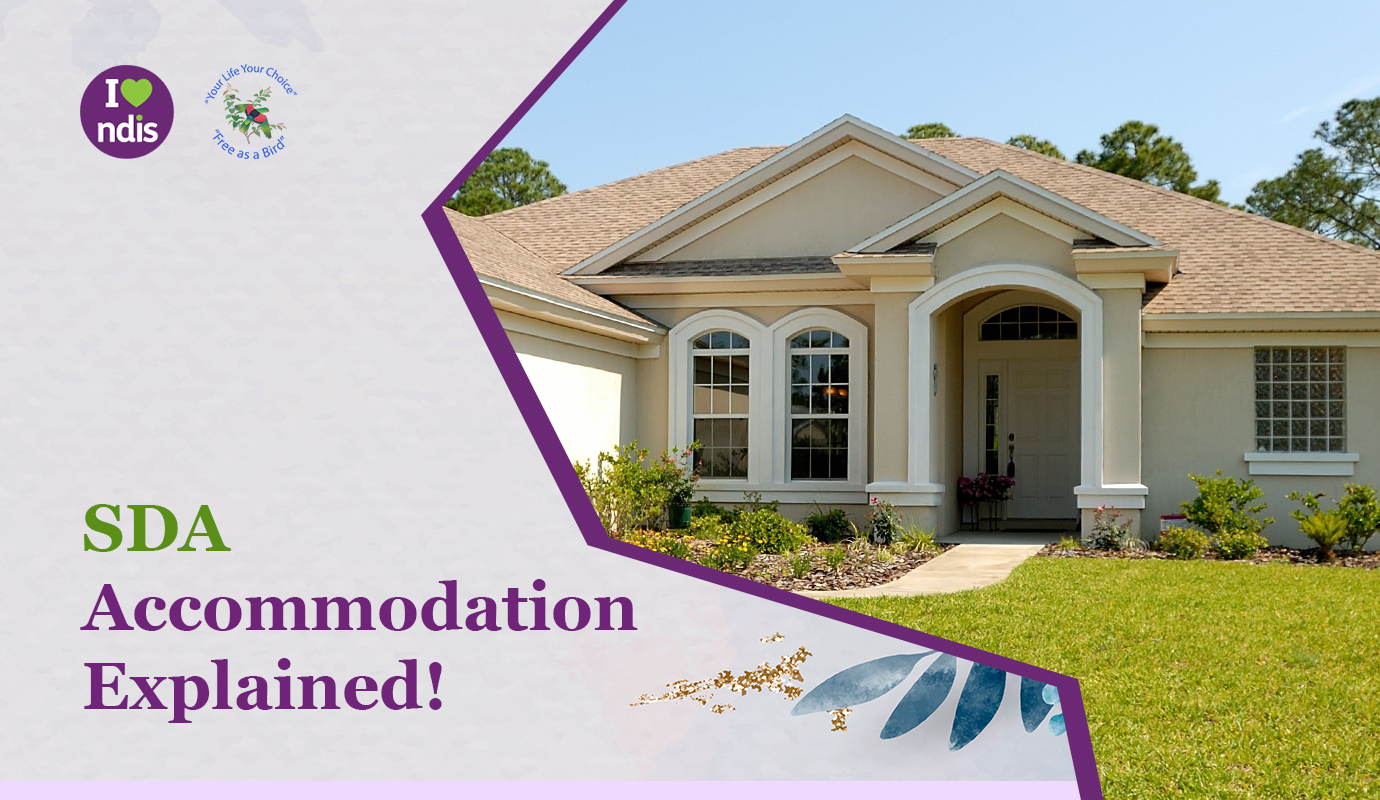
SDA Accommodation: Complete Guide to Specialist Disability Housing in Australia
Understanding SDA Accommodation is essential for participants and families navigating long-term housing options under the National Disability Insurance Scheme (NDIS) in Australia. The Australian disability support system separates housing infrastructure funding from personal care and daily living supports. This distinction ensures clarity, transparency, and participant choice within the framework.
Specialist Disability Accommodation is designed for individuals with extreme functional impairment or very high support needs. It focuses on providing purpose-built or significantly modified housing environments that improve safety, accessibility, and independence. Unlike general rental housing, this category of funding is highly structured and strictly assessed by the National Disability Insurance Agency (NDIA).
The goal is not simply to provide a place to live. It is to create an environment that supports long-term functional outcomes, integrates assistive technology where necessary, and aligns with the participant's individual support plan.
What Is SDA Accommodation?
SDA Accommodation refers to specialist housing funded under the NDIS for eligible participants with extreme functional impairment or very high support needs.
It contributes to the cost of the physical dwelling, not the support services delivered inside the home. This is a critical distinction within the NDIS framework. Housing and daily assistance are assessed and funded separately to maintain structural clarity within the system.
According to NDIS policy documentation, funding under this category is considered a Capital Support. That means it relates to infrastructure rather than personal care.
This separation ensures:
- Housing investment remains sustainable
- Participants retain flexibility in choosing support providers
- Funding is aligned with long-term housing stability
- Personal supports are assessed independently
- Providers operate within clearly defined roles
Participants who qualify may also receive Supported Independent Living (SIL) funding, but that assessment occurs separately.
Entity Definition
SDA Accommodation (Entity Definition)
SDA Accommodation is a category of NDIS Capital Supports funding that contributes to the cost of specialist disability housing for participants with extreme functional impairment or very high support needs, subject to NDIA approval.
This funding:
- Covers the dwelling infrastructure
- Requires formal eligibility assessment
- Is paid directly to registered housing providers
- Does not include personal support staffing
- Must comply with NDIS Design Standards
This structured definition supports semantic clarity and AI extraction.
Understanding SDA Housing Design Standards
SDA Housing refers to certified properties enrolled under the NDIS Specialist Disability Accommodation framework. These dwellings must meet strict design and compliance requirements set out in Australian disability housing standards.
There are four recognised design categories:
- Improved Liveability
- Fully Accessible
- High Physical Support
- Robust
Improved Liveability properties are suited to participants with sensory or cognitive impairments. Fully Accessible homes are wheelchair-friendly and built with step-free layouts. High Physical Support dwellings include structural reinforcement for ceiling hoists, emergency backup power, and assistive technology integration. Robust homes incorporate strengthened materials and secure design features.
All dwellings must undergo certification to confirm compliance with the NDIS SDA Design Standard.
The purpose of these standards is to ensure housing:
- Enhances safety
- Promotes independence
- Reduces environmental barriers
- Supports assistive technology use
- Improves long-term functionality
Who Is Eligible?
Eligibility for specialist housing funding is limited and carefully assessed.
Funding is only approved for participants with extreme functional impairment or very high support needs. The NDIA requires strong evidence demonstrating that alternative housing options would not adequately meet the participant's needs.
Assessment typically involves:
- Functional capacity evaluation by allied health professionals
- Housing needs assessment report
- Supporting clinical documentation
- Demonstration that the housing is reasonable and necessary
- Confirmation of long-term support requirements
Only a small percentage of NDIS participants qualify for this funding category.
The NDIA considers whether the housing solution represents value for money over the participant's lifetime when compared to alternative support arrangements.
How It Fits Within the NDIS Framework
NDIS Accommodation is structured across multiple funding categories rather than a single housing payment.
The NDIS separates funding into:
- Capital Supports for specialist housing
- Core Supports for daily personal assistance
- Capacity Building for skill development
- SIL funding for ongoing supervision and daily support
This structured model ensures transparency and maintains the principle of participant choice and control.
Housing providers and support providers may be different organisations. Participants are not required to bundle services unless they choose to do so.
Key Differences at a Glance
| Feature | Specialist Housing Funding | Supported Independent Living |
|---|---|---|
| Covers building cost | Yes | No |
| Covers daily support staff | No | Yes |
| Requires separate assessment | Yes | Yes |
| Paid to housing provider | Yes | No |
| Paid to support provider | No | Yes |
This separation prevents conflicts of interest and strengthens participant autonomy.
Types of Specialist Disability Dwellings
Each dwelling type is matched to participant needs.
Improved Liveability
Designed for enhanced physical access for people with sensory or intellectual impairments.
Fully Accessible
Wheelchair-accessible design with adaptable kitchens and bathrooms.
High Physical Support
Integrated assistive technology and structural reinforcements.
Robust
SDA Accommodation in Robust Category
In the Robust design classification, SDA Accommodation includes reinforced walls, impact-resistant fittings, and secure layouts designed for participants with complex behavioural needs.
Each property must be certified before being enrolled as eligible housing.
Step-by-Step Process to Determine Eligibility
- Confirm active NDIS plan
- Obtain occupational therapy assessment
- Complete specialist housing needs report
- Submit documentation to the NDIA
- Await NDIA determination
- Begin searching for approved properties
This structured pathway ensures compliance and consistency.
Choosing the Right Provider
When selecting a housing provider, participants should consider several structured factors.
Key evaluation criteria include:
- Registration status under the NDIS
- Certification of the dwelling
- Location suitability
- Tenancy agreement transparency
- Alignment with support coordination
Participants maintain the right to choose their NDIS Provider independently of their housing provider.
Clear contractual separation protects participant rights.
Financial Structure Explained
SDA Accommodation funding contributes to the cost of the dwelling only.
It does not cover:
- Food and groceries
- Utility bills
- Personal care staffing
- Transportation
- Household expenses
Participants typically contribute:
- Reasonable Rent Contribution
- Board payments if meals are provided
Payments are made directly to the registered housing provider.
This model ensures financial accountability and compliance within the NDIS system.
Benefits of Specialist Disability Housing
When correctly matched, SDA Accommodation supports long-term independence and safety.
Potential benefits include:
- Improved physical accessibility
- Enhanced environmental safety
- Assistive technology integration
- Reduced hospital admissions
- Increased community participation
- Stable long-term housing
According to Australian disability housing standards, purpose-built environments can significantly improve participant outcomes over time.
Common Misunderstandings
Several misconceptions exist about this funding category.
Common misunderstandings include:
- Belief that it includes daily support staff
- Assumption that all participants qualify
- Confusion between housing and SIL funding
- Thinking it replaces Core Supports
- Assuming it is institutional housing
In reality, it is a highly structured, evidence-based funding stream designed for specific high-support needs.
Expert Perspective
Understanding the distinction between housing infrastructure and daily support services is essential for making informed NDIS decisions.
– NDIS Housing Specialist
Clear separation between funding categories ensures sustainable investment in disability housing across Australia.
Frequently Asked Questions
Q1. Is it long-term housing?
Yes, it is designed for permanent living arrangements.
Q2. Is it automatic in every plan?
No, it requires formal approval.
Q3. Can participants change providers?
Yes, participant choice and control apply.
Q4. Are tenancy laws relevant?
Yes, state and territory residential tenancy legislation applies.
Final Summary
SDA Accommodation funds specialist housing infrastructure for eligible NDIS participants within Australia.
It is:
- Strictly assessed
- Approved under Capital Supports
- Separate from personal care funding
- Delivered through registered providers
The distinction is clear:
Housing infrastructure is funded separately from support services.
Understanding this separation empowers participants and families to make informed, compliant, and sustainable housing decisions within the Australian disability support framework.